The metamorphosis of Movie Archetypes
A timeless tale of film personas
Introduction
Welcome to a cinematic journey through time! Grab your popcorn as I explore the fascinating world of movie characters across decades. I set out with one goal: to find characters who reflected the grand historical events of their times—soldiers after the World Wars, revolutionaries in the wake of social upheaval, and heroes born from global crises. But, like any great adventure, the unexpected awaited me. Instead of finding archetypes that fit perfectly with the events I imagined, I met an entirely different cast of characters, shaped in unexpected ways by the evolving spirit of their eras.
Before we dive into these surprising discoveries, let’s take a peek at the treasure trove of data that guided my journey. Think of it as a time traveller’s archive, filled with insights about movie genres, country contributions, and evolving trends across the globe.
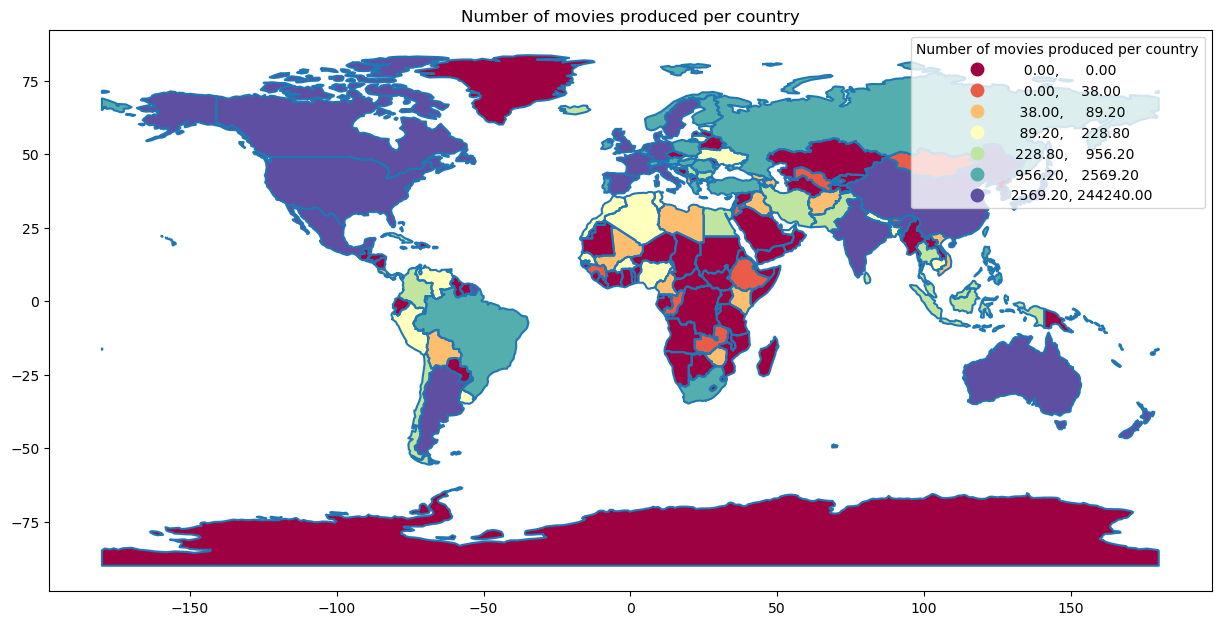
First stop: the global map of cinema! From Hollywood blockbusters to Bollywood extravaganzas, our data spans decades of movie production from across the globe. It’s like a world tour of cinema! The heatmap reveals the contribution of different countries to the movie industry — while Hollywood leads the pack, emerging stars of global cinema are lighting up the map! Lights, camera… world stage!
Next up, the genres that define our cinematic journey. Drama, comedy, action, horror — each genre offers a lens into the emotions and themes of its time. But which ones defined each era? Dive into the graph to explore the highs and lows of genre trends through the years.
Finally, let’s tackle a pressing question: gender representation. Who’s been taking the lead in cinematic adventures? Over the decades, has the spotlight shifted from damsels in distress to sword-wielding heroines? Sadly, the data tells a more sobering story as you can see by playin around with the trends...
Welcome to Ada’s Cinematic Time Machine!
Hold tight, because we’re about to embark on a journey through the decades! Instead of encountering the archetypical characters I expected—shaped by major events like wars and revolutions — I found entirely different 'friends' who reflected the shifting societal moods, cultural trends, and creative movements of their times. These characters weren’t born out of historical events but from the unique vibe of their eras. Join me as I uncover how movies, genres, and characters evolve, not necessarily in response to landmark events, but as mirrors of changing cultural landscapes. Let me show you a few surprising friends I made along the way!
The 20s: The Roaring Twenties
As I slipped into the hustle and bustle of the 1920s, feeling right at home in my flapper dress and with my bobbed hair, I soon realized that the characters I had been expecting to meet—soldiers, war heroes, and political figures—simply didn’t appear. I expected to encounter characters moulded by the aftermath of World War I—figures shaped by themes of loss, recovery, and the rebuilding of society. But to my surprise, I found something else entirely — something that defied my expectations and revealed a deeper cultural shift.
In fact, the themes that dominated the films of the 1920s were quite a departure from what I had expected. My heatmap revealed a fascinating mix of themes like Queen-fashion, Queen-tennis, experiment-right, betrayal-right, and family-right. These are themes that don’t seem immediately linked to the aftermath of World War I or the political upheavals I had anticipated. Instead, they reflect a deeper cultural shift—a focus on personal identity, societal roles, and evolving family dynamics, all against the backdrop of the Jazz Age.
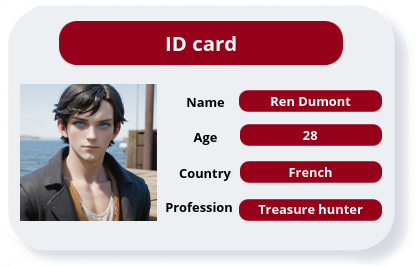
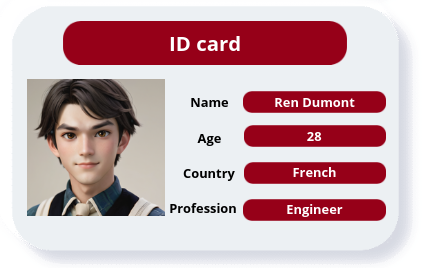
And then, I met my first unexpected friend: Ren Dumont who could be a treasure hunter or an engineer. Well, here’s where things get interesting. While the heatmap didn’t show a direct correlation with war or political themes, it highlighted the broader shifts in society during the 1920s. The characters I encountered—especially Ren—might not fit perfectly into those themes, but they still reflect the changing world in their own way. If you're too impatient to find out how I met this character, you can go straight to the ‘Decoding decades...and my errors' section.
The first Ren Dumont I met was a charismatic adventurer—a globe-trotting treasure hunter, driven by a deep desire to uncover his family’s past and always on the run from danger. His thrilling escapades are less about responding to war and more about the adventure of exploring the unknown. This Ren reflects the growing global reach of cinema in the 1920s, mirroring the decade’s spirit of exploration and curiosity.
But when I met the second Ren Dumont, I was even more struck by how different he was. This Ren is an engineer—focused on technological progress, practical solutions, and the future. The second version of Ren embodies the push toward innovation that defined the 1920s, a time of great technological and industrial change. His character is more aligned with the themes of experiment-right and family-right from the heatmap, as these themes relate to the idea of personal reinvention, family legacy, and the shift towards a modern world.
Actually, thanks to Ren, I understand one thing. Even if Ren’s characters don’t directly align with the historical themes of the time, they reflect the spirit of the 1920s in a broader sense: a desire for personal discovery, a push toward technological advancement, and an ongoing redefinition of societal roles. After the twists of the 1920s, I couldn’t shake the feeling that the characters I was searching for were still out of reach. But with the world heading into even greater upheaval, I decided to move on to the next chapter: the 1940s, where I hoped the characters would finally match the historical context I had been looking for.
The 40s: Wartime and Resilience
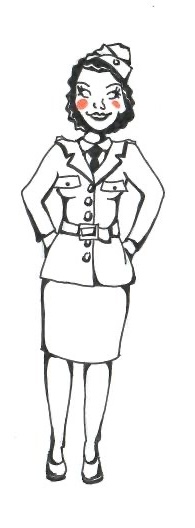
I slipped into my uniform, ready to encounter the characters that would finally match the historical context I’d been waiting for. As I entered the 1940s, I hoped to finally encounter characters that reflected the historical context of WWII. But as the heatmap unfolded, I realized things weren’t as simple as I had expected. The themes of 'romance-WWII' and 'horror-WWII' were strong, but they didn't just give rise to the expected heroes and soldiers.
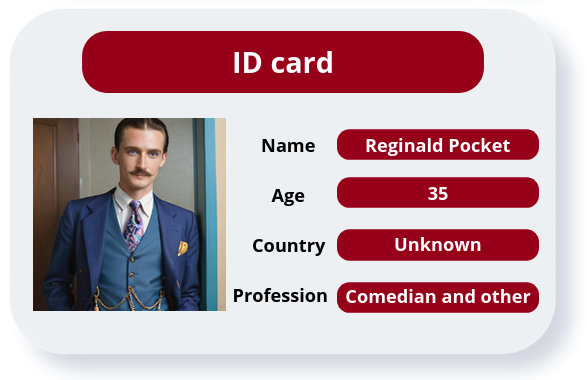
Instead, I encountered characters like Ethan Blackwood and Reginald 'Reg' Pocket—figures who reflected the personal, emotional aftermath of the war, rather than grand historical narratives. These were characters grappling with their own struggles in a world that had been forever altered.
Ethan, a former medic turned private investigator, is driven by the psychological scars of the war. His cases are complex, but his true battle lies within—mirroring the post-war experience of survival and recovery. Meanwhile, Reg, the lovable everyman, brings lightheartedness to a time when the world needed a bit of humour. His comedic mishaps and ability to turn any disaster into a laugh reflect the optimism and resilience of the era.

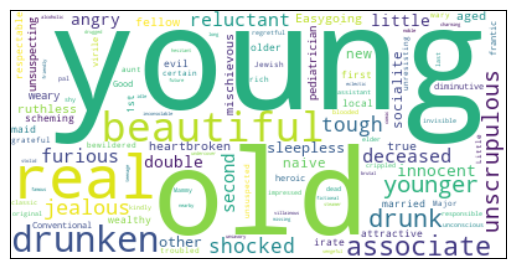
The adjectives 'young,' 'old,' 'real,' 'beautiful,' and 'drunken' seem to capture this personal shift as well, reflecting characters who are more human, more relatable, and more focused on individual identity in the face of a changing world. If I had expected characters from the war era, I might have imagined adjectives like 'brave,' 'strong,' 'heroic,' or even 'sacrificial'—qualities that would align with the traditional wartime hero. Instead, the adjectives I found are more reflective of personal struggles and identities, emphasizing a more complex, multifaceted view of the characters during a time of recovery and adaptation.
After meeting Ethan and Reg in the 1940s, I started to think I might be onto something—characters shaped by historical themes, but still with an unexpected twist. Yet, as they say, things never come in twos without a third. So, I set out for one more stop on my journey, ready to uncover yet another surprise that would challenge my initial theory. This time, I traveled to the 2000s, a time I thought would surely give me clear-cut archetypes to prove my point. Spoiler alert: it didn’t go as planned either, but what I found was just as fascinating!
The 2000s: Changing of century
And here I am again, ready to dive into one last adventure through time. For the 2000s, I’ve embraced the look—low-rise jeans and a cropped top to blend right in. (Every time traveller knows the importance of looking the part!) But as always, I found myself on a surprising path.
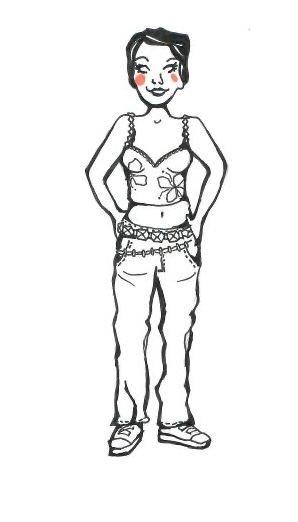
For the 2000s, the heatmap pointed to powerful themes like relationships and scandal, as well as adventure and sports—bold topics that dominated the decade’s cinematic landscape. But, true to form, the characters I met weren’t exactly the perfect match. Instead of tales steeped in drama or adrenaline-fuelled sports adventures, I encountered Luna and Rami—two fascinating individuals who reflect something different altogether. Let me tell you about them!
First, let me introduce Luna. By day, she’s a fashion designer with an eye for elegance and creativity, running her boutique like a true artist. But by night, she transforms into an amateur detective, solving mysteries with her sharp wit, her knack for disguise, and her loyal cat, Raven, always by her side. Luna’s world is all about blending the old and the new—whether she’s channeling 1920s glamour or navigating the modern street art scene. She’s clever, curious, and not afraid to follow her instincts wherever they lead.
Then, there’s Rami. She’s an archaeologist and curator specializing in Ancient Egyptian artefacts, carrying on her family’s legacy of exploration and discovery. Rami is as adventurous as she is analytical, with a passion for solving puzzles—whether they’re cryptographic, historical, or even supernatural. With her love of junk food, her sharp sarcasm, and her resourceful nature, Rami brings a perfect mix of humour and determination to every challenge she faces. She’s fearless, loyal, and always ready to dive into the unknown.
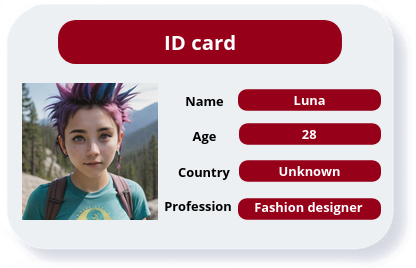

Now, while both Luna and Rami are incredibly compelling characters, they don’t quite reflect the heatmap’s dominant themes of relationships, scandal, or sports adventures. Instead, they seem to represent a more personal journey—stories of creativity, curiosity, and a thirst for uncovering mysteries. They show how characters can still captivate us even when they don’t align perfectly with the overarching trends.
Reflecting on my journey, it’s clear that the characters I encountered didn’t align with the historical themes I had expected. I only give some examples of the friend I made, but trust me, this is the same for each decade. But as I dug deeper, I realized there was something else at play—something unexpected, subtle, and yet deeply revealing about how cinema engages with history. But first, I think it is important to understand why I was wrong...
Decoding Decades...and my errors
Alright, fellow time travelers, it’s confession time. Let’s talk about how I tried to uncover the secrets of cinematic history—and why things didn’t quite turn out as expected.
At the outset of this journey, I was confident and eager. Armed with my tools, I believed I knew exactly what to expect. I used LDA, the clever algorithm that grouped words into themes like ‘war,’ ‘romance,’ or ‘adventure.’ It gave me these big-picture maps of what movies were about in each decade. Pearson correlation let me connect these movie themes to real-world events—like linking mentions of ‘navy’ to WWII.
Then came Large Language Models, these brilliant AIs that could devour movie summaries in seconds and spit out key themes. They felt like a time traveler’s perfect companion—fast, sharp, and endlessly curious. Everything seemed to be falling into place, like puzzle pieces clicking together.
But as I mapped words into coordinates with embeddings and grouped movies into clusters with K-Means, I started to notice something… off. The connections were there, but they weren’t what I had expected. I thought I’d meet characters who were reflections of the big events I’d mapped—war heroes, revolutionaries, historical figures shaped by their time. But instead, I met adventurers, comedians, dreamers—figures who seemed to tell a more personal, sometimes whimsical story.
And that’s when I started to question my approach. Maybe history doesn’t shape characters the way I imagined. Maybe the stories we tell in movies aren’t direct echoes of the events happening around us but are shaped by something more subtle—the emotions, hopes, and anxieties of the people living through those times. Or maybe it’s my methods. Did I focus too much on the big, obvious connections? Did I miss the quieter, more personal ways history seeps into our stories? Am I looking for patterns that don’t quite exist, or am I just looking in the wrong place?
I can’t help but wonder: Did my tools reveal the truth, or did they simply show me what I wanted to see? The more I think about it, the more I realize that this journey isn’t just about finding answers—it’s about asking better questions. And that’s exactly what I plan to do next.
An unexpected interesting finding
Admittedly, the journey didn’t unfold as I had envisioned, but every journey offers valuable lessons and unexpected discoveries. As I grappled with the unexpected characters and questioned my methods, a new pattern began to emerge—one I hadn’t noticed before.
While I was busy searching for characters shaped by history, I overlooked something bigger: the themes themselves. As I looked closer, I realized that historical context wasn’t shaping the characters directly—it was shaping the stories we tell. The main themes of the movies in each decade weren’t random; they resonated with the fears, hopes, and aspirations of their time.
This graph here—one of the crown jewels of my analysis—shows the strongest correlations between historical context and movie themes over the decades. Each bubble represents a correlation between historical themes (on the left) and cinematic clusters (on the bottom), with the bubble's size indicating the strength of the connection. The colours? They represent the decades, from the 19000 to 2000.
- Early Decades (1900s–1930s): The darker bubbles on the left, like 'Transmit' and 'Radio,' show how early technological advancements influenced the themes of the time. The rise of mass communication shaped not only historical milestones but also the storytelling in movies, reflecting society’s fascination with innovation.
- Mid-Century (1940s–1960s): Moving into the orange and yellow bubbles, we see clusters like 'Warfare' and 'Survival' strongly correlating with historical events like World War II and its aftermath. It makes sense—movies often mirrored the resilience and struggles of this era. These themes don’t just tell us about the war; they reveal the human stories within it, from survival to rebuilding.
- Modern Times (1970s–2000s): As we transition into the green and teal bubbles, we see themes like 'Relationships,' 'Adventure,' and 'Lovers' coming into focus. These correlations reflect a shift toward more personal and dynamic storytelling, influenced by societal changes like the sexual revolution, globalization, and the rise of blockbuster filmmaking. The emphasis here is on connection and escapism, matching the mood of their times.
So, what’s the big takeaway? While the characters themselves might not directly mirror historical events, the overarching themes of the movies do. This graph is proof that cinema serves as a reflection of society’s collective concerns, aspirations, and obsessions throughout history.
Searching for the Indirect Links
As I continued my exploration of movie themes, I couldn’t help but wonder: If historical events shape the overarching themes in cinema, is it possible that there are more subtle, indirect links between the most common movie themes and the broader historical context of each decade? After all, the themes might not always directly mirror historical events, but perhaps they could reflect the societal mood or the underlying concerns of the time. Maybe, just maybe, there’s something deeper—an unspoken connection that runs through the very fabric of cinema.
I decided to investigate. Could these themes reveal something about the way society was grappling with history, even if it wasn’t immediately obvious in the stories being told on the screen? The more I thought about it, the more I was convinced that, yes, there must be a connection—something subtle, yet powerful.
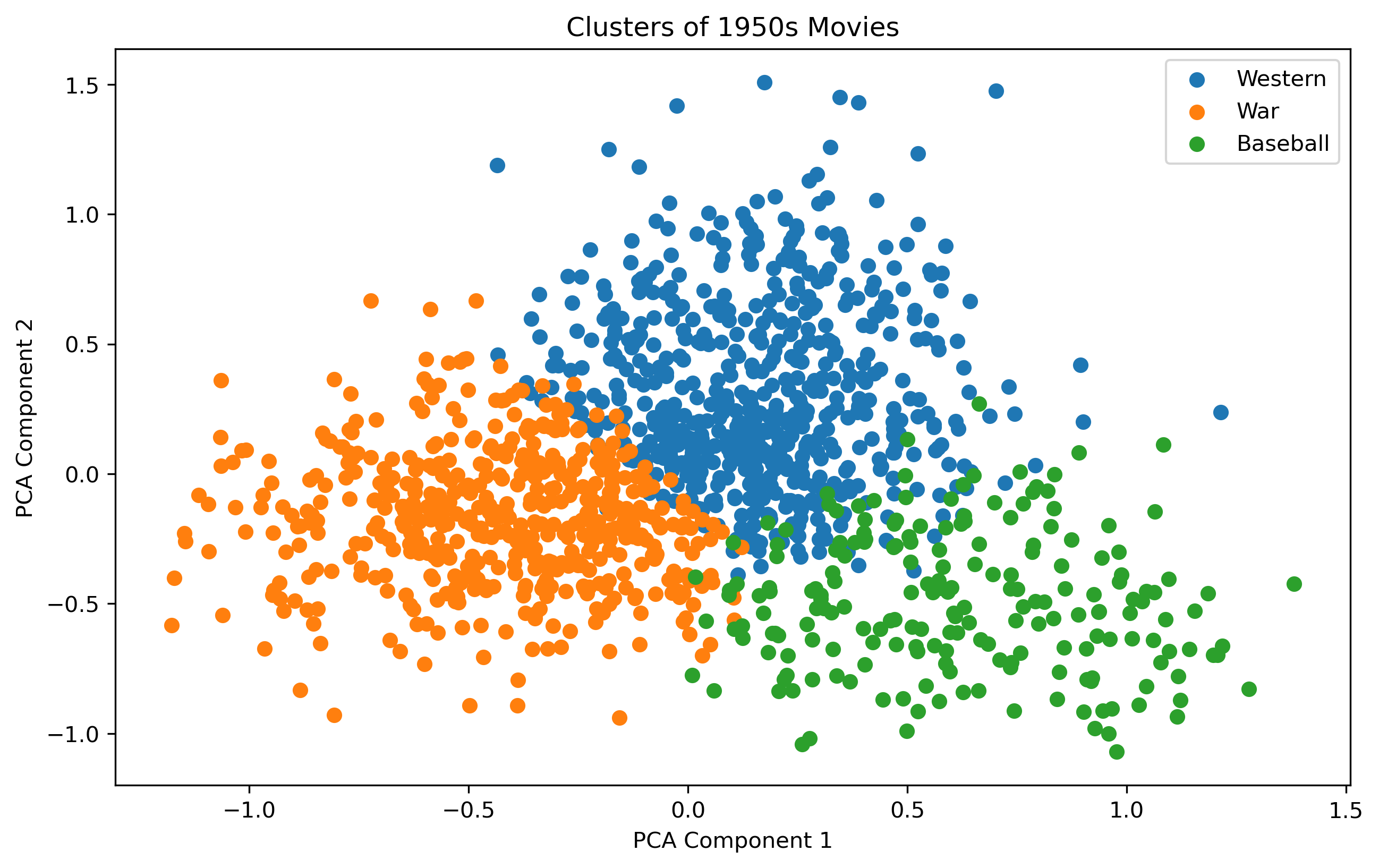
Let’s start with the 1950s. The dominant movie themes were western, war, and baseball. At first glance, these might seem like disparate genres, but they were more than just genres—they were reflections of the era’s broader cultural and historical landscape. The western, with its lone hero and expansive frontier, captured the post-World War II desire for renewal and the search for national identity. America was recovering from the war, and the western reflected that drive for reinvention. Meanwhile, war films echoed the ongoing tension of the Cold War, with global conflicts looming large in the collective consciousness. And of course, baseball was about much more than just the sport—it was an emblem of American optimism and the ideal of perseverance, much like the nation’s hope for a bright, prosperous future after the devastation of WWII.
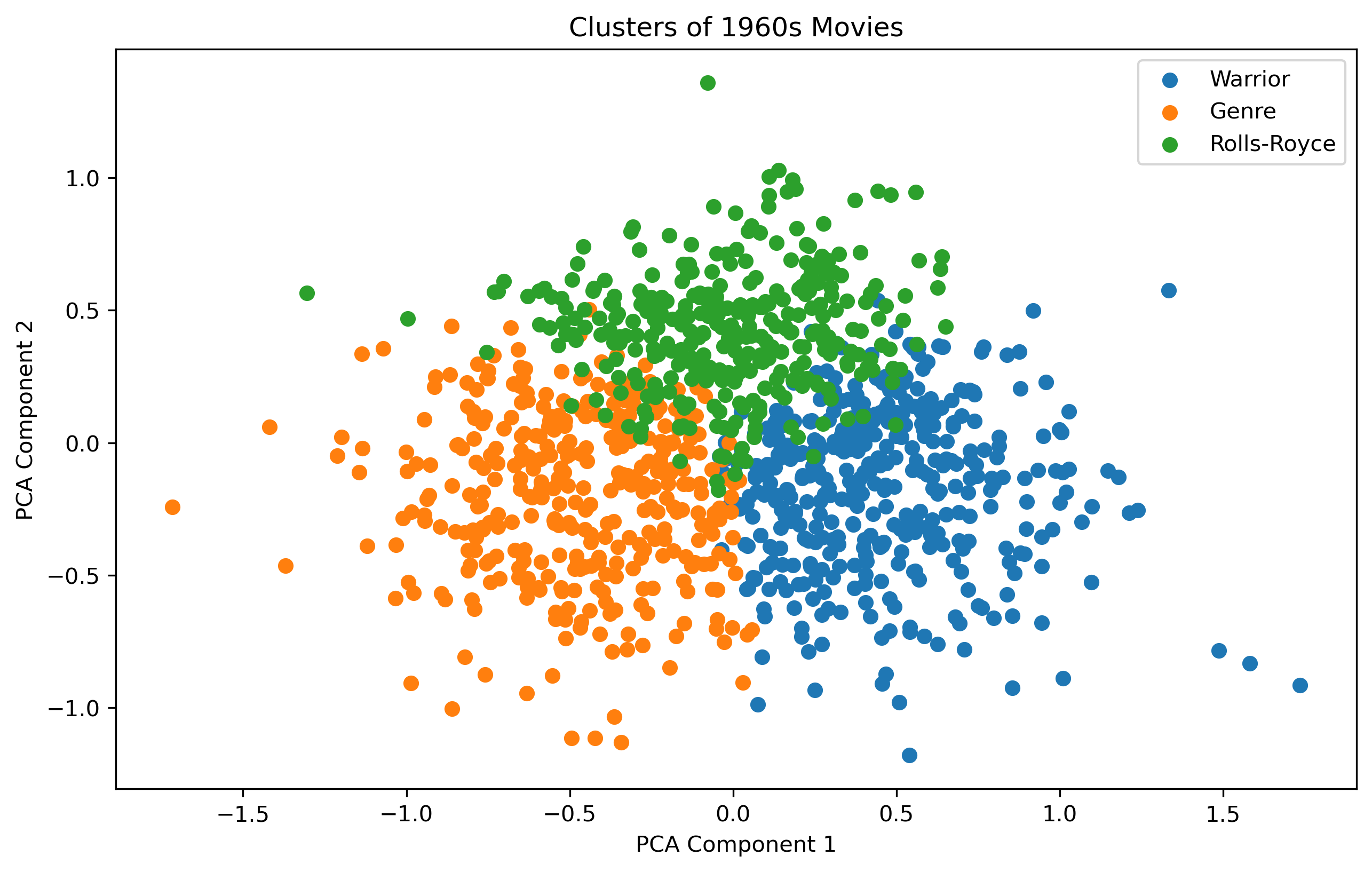
Now, as I moved into the 1960s, I couldn’t resist once again adapting my clothes to match the decade I was exploring—because what's a journey through time without fully embracing the era? The 60s called for mod dresses, go-go boots, and that quintessential beehive hairstyle. And as I slipped into those iconic outfits, I felt a deeper connection to the films of the time, particularly the prevailing themes of warrior, genre, and even Rolls-Royce. On the surface, these might seem like an odd mix, but the more I thought about it, the more the connections began to make sense.
The warrior figure in the 1960s films spoke to the anxiety surrounding the Vietnam War and the broader societal unrest. These films weren’t just about battles; they were about identity and struggle, reflecting the global conflicts of the era. The presence of Rolls-Royce, that symbol of wealth and luxury, felt almost out of place against the backdrop of the rising counterculture—but it perfectly illustrated the tension between affluence and protest. And the genre films, spanning everything from spy thrillers to sci-fi, mirrored the decade’s preoccupation with technology, warfare, and the unknown, with the space race and escalating global conflicts at the forefront of people’s minds.
So, yes—looking at these themes more closely, I saw how each one indirectly reflected the historical and societal undercurrents of the time. The 1950s and 1960s may have been decades defined by different challenges, but the themes of their cinema spoke volumes about how history, even in its more subtle forms, shaped the stories we told. On returning from my trip I realised that this reasoning holds true for all decades, as each era's unique dynamics find their way into the narratives and themes that define its films.
Conclusion of this journey
As our cinematic journey comes to an end, I can’t help but reflect on the surprises along the way. What started as a search for characters shaped by historical events turned into something deeper. Instead of neat historical matches, I discovered that movies reflect the spirit of their time—societal shifts, emotional undercurrents, and cultural movements.
While I expected to find clear-cut archetypes like war heroes or revolutionaries, I found characters driven by personal quests, identity, and survival. History doesn’t always directly shape the characters we see on the screen, but it certainly influences the themes, moods, and stories we tell.
The big takeaway? Cinema isn’t just about events—it’s about how we feel and respond to them. Movies capture the human experience, showing us not just what happens, but how it resonates with us across time. So next time you watch a film, remember: it’s not just the events on the screen, but the vibe of the era that shapes its characters.
Now, I’m off to dive back into my favorite decade—the 80s, where neon lights and synth music rule! But before I go, I encourage you to keep exploring the world of cinema. Even if you don’t always find exactly what you’re looking for when you search for certain results, there’s always another layer waiting to be uncovered. You never know what unexpected gems you might discover next.
Credits for Ada’s drawings: Marianne Ducret